Cooking a steak in a pan is one of the most rewarding skills you can learn in the kitchen. It looks simple, but doing it right takes understanding, patience, and respect for heat. When done properly, a Cast Iron Steak delivers bold flavor, a deep crust, and a juicy interior that rivals any steakhouse.
As a chef, I always tell people this: great steak is not about tricks or shortcuts. It comes down to strong fundamentals. You need the right cut, the right pan, proper seasoning, and control over heat. Miss one of these, and the steak will tell you immediately.
In this guide, I’ll walk you through everything you need to know to cook a steak perfectly in a cast iron pan. From choosing the steak to building crust, flipping correctly, butter basting, and resting, this is a complete breakdown you can follow with confidence at home.
What We’re Trying to Achieve
When cooking a steak in a pan, two priorities matter more than anything else:
- A strong, deeply flavorful crust
- An even, edge-to-edge medium-rare interior
That’s it.
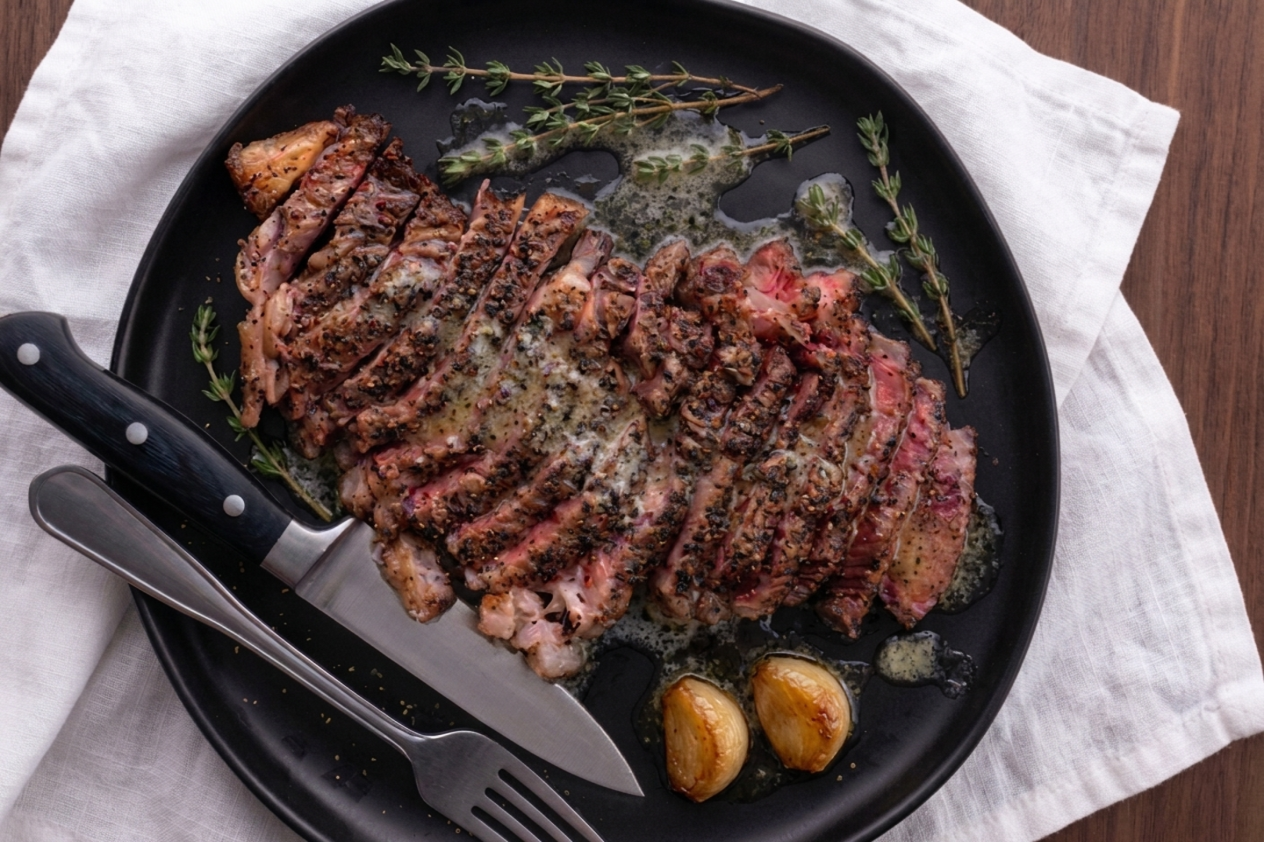
A great steak should have a dark, mahogany-colored crust with real depth of flavor. Inside, it should be pink and juicy from edge to edge, not gray, dry, or uneven. The contrast between the crust and the tender interior is what makes steak special.
What you want to avoid is the dreaded gray band. That happens when a steak cooks too slowly or unevenly. Instead of a clean transition from crust to pink center, you get a thick layer of overcooked meat around the outside. That gray band kills both texture and flavor. Everything we do in this method is designed to prevent that.
Choosing the Right Steak
Before you even think about pans or seasoning, you need to start with the right steak. No technique can save a bad cut of meat.
Why Marbling Matters Most
When selecting a steak, the first thing you should look for is marbling. Marbling is the white fat running through the muscle. This intramuscular fat melts as the steak cooks, adding flavor and tenderness.

More marbling means:
- Better flavor
- Juicier texture
- More forgiveness during cooking
Always choose the steak with the most marbling available within your budget.
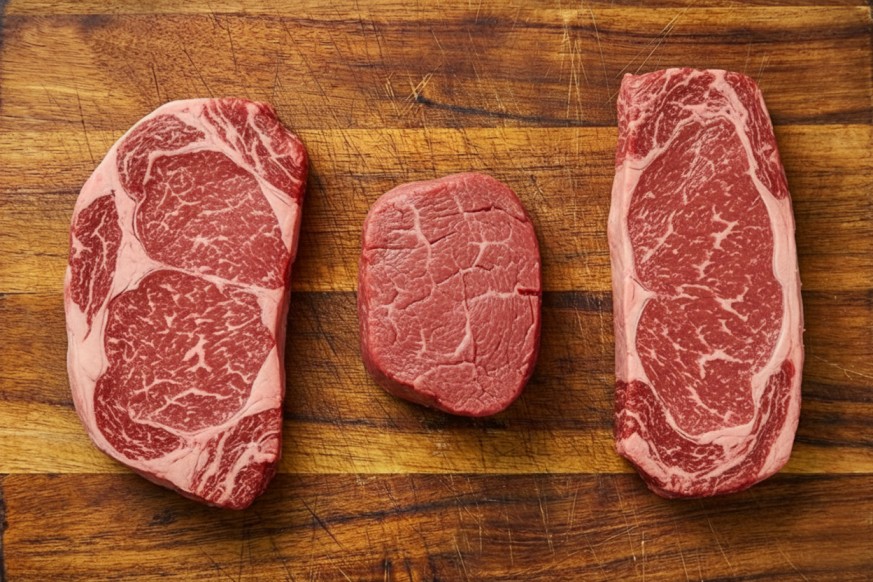
The Best Steaks for Pan-Searing (The Holy Trinity)
These three cuts perform exceptionally well in a cast iron pan because they respond beautifully to high heat.
Ribeye
Ribeye is the most flavorful steak you can pan-sear. It has heavy marbling and a rich, beefy taste. Because of its fat content, it develops an incredible crust and stays juicy even at higher heat.
Tenderloin (Filet Mignon)
Tenderloin is the most tender cut. It has less fat than ribeye, but its texture is unmatched. Because it’s leaner, butter basting becomes especially important.
New York Strip
The New York strip sits right between ribeye and filet. It has good marbling, strong structure, and excellent flavor. This is one of the most reliable cuts for pan-searing.
Other Cuts That Can Be Pan-Seared (With Care)
Some cuts can still be cooked in a cast iron pan, but they require proper slicing to stay tender.
- Picanha
- Skirt steak
- Hanger steak
- Denver steak
- Flank steak
The Key Rule for These Cuts
You must slice them against the grain. Cutting against the grain shortens the muscle fibers, making the steak tender. Cutting with the grain will result in a chewy, unpleasant bite, no matter how well you cook it.
Cuts You Should Avoid for Pan-Searing
Some cuts are simply not designed for high-heat cooking.
- Eye round
- Bottom round
- Brisket
- Short ribs
These cuts contain tough connective tissue and need low, slow cooking methods like braising or smoking. Pan-searing them will result in a steak that’s tough and nearly impossible to eat.
Steak Thickness: Why It Matters
Thickness plays a major role in how well your steak cooks.
Ideal Thickness
- Minimum: 1 to 1¼ inches
- Ideal: 1½ inches or thicker
What to Avoid
Thin steaks (¾ inch or less) cook too fast. They overcook before a proper crust can form. Instead of browning, they turn gray and bland.
A thick steak gives you time to:
- Build a dark crust
- Control doneness
- Avoid overcooking the interior
Choosing the Right Pan
As a chef, I can tell you this with confidence: your pan matters almost as much as your steak. You can buy the best cut in the shop, season it perfectly, and still end up with a weak crust if your pan can’t hold heat. When we cook a Cast Iron Steak, our goal is extreme, steady heat. That heat is what creates flavor.
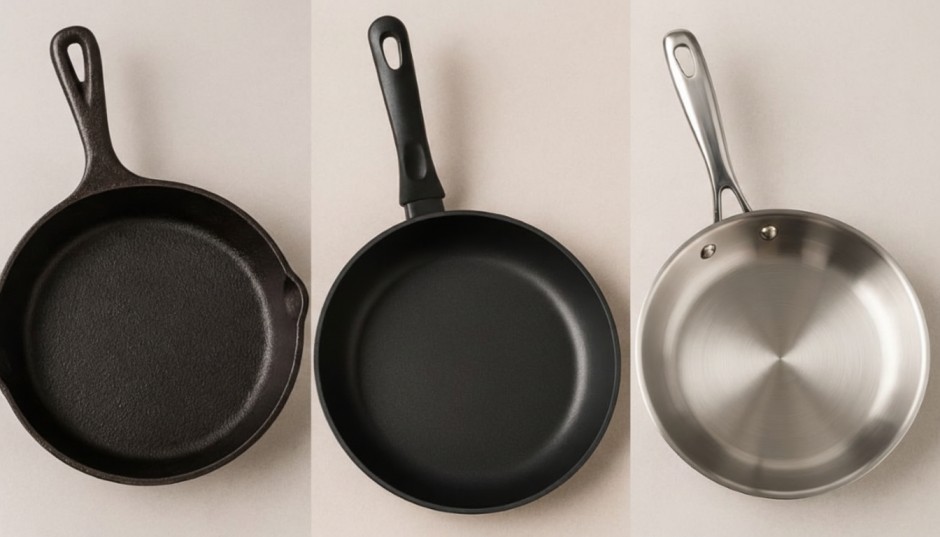
Let’s talk about why different pans perform differently and why cast iron stands above the rest.
Why Heat Retention Is Everything
When a cold steak hits a pan, the pan temperature drops instantly. If the pan can’t recover fast, the steak will start steaming instead of searing. Steaming creates a pale surface, not a crust. That’s how you get a gray, lifeless steak.
A good pan does two things:
- Gets very hot
- Stays hot when the steak goes in
Thickness and material decide whether a pan can do that.
Non-Stick Pans (Worst Choice)
Non-stick pans are designed for convenience, not power.
- They are thin and lightweight
- They lose heat fast
- Most coatings break down at high heat
High-heat searing damages the coating and releases unpleasant flavors. Even worse, you can’t push the pan hard enough to get real browning. That’s why non-stick pans are great for eggs but terrible for steak.
Bottom line: Avoid non-stick for Cast Iron Steak-style cooking.
Hybrid Pans (Decent, but Limited)
Hybrid pans, like HexClad, sit in the middle.
- They handle more heat than non-stick
- They’re easier to clean
- They work fine for thinner steaks
But they still don’t store heat like heavy metal pans. Once you add a thick steak, the temperature drops. You’ll get browning, but not the deep, dark crust chefs aim for.
Good for home cooks, not ideal for perfection.
Stainless Steel Pans (Excellent)
A thick stainless-steel pan is a serious tool.
- Strong heat retention
- No coating to burn
- Great fond development
Stainless steel does require skill. The steak will stick at first, then release once a crust forms. That’s normal. If you panic and move it too early, you tear the surface and ruin the crust.
If cast iron didn’t exist, stainless steel would be my second choice.
Carbon Steel Pans (Better)
Carbon steel pans behave like a lighter version of cast iron.
- They heat extremely fast
- They can reach very high temperatures
- They develop a natural seasoning over time
Professional kitchens love them because they respond quickly. The downside is heat stability. When a cold steak goes in, carbon steel loses heat faster than cast iron.
Amazing for fast cooking, slightly less forgiving.
Cast Iron (The Gold Standard)
Cast iron is king for a reason.
- Extremely thick
- Massive heat retention
- Can exceed 1,500°F
- Barely cools when the steak hits the pan
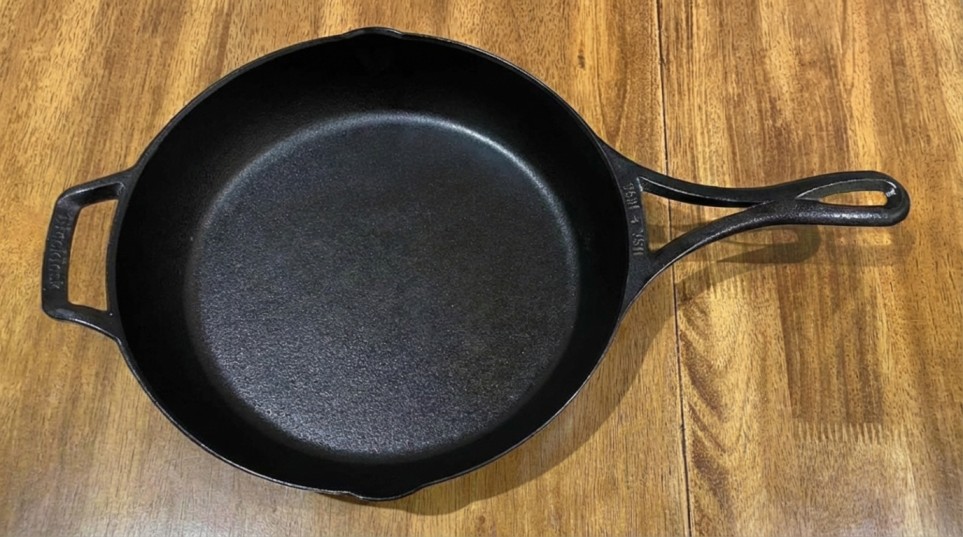
This is what allows a cast iron steak to form a deep, even crust. The pan stays hot and consistent.
That consistency is what prevents uneven browning and gray bands. The steak sears instead of steaming. The fat renders properly. The Maillard reaction happens fast and clean.
How to Season a Steak Properly
Steak doesn’t need complicated seasoning. In fact, too much seasoning often ruins the crust.
The Best Seasonings
- Kosher salt
- Black pepper
Kosher salt is ideal because its large grains give you control. Thicker steaks require more seasoning than thinner ones.
Black pepper is usually toasted instead of burned, so it’s safe to season before cooking.
What to Avoid
- Garlic powder
- BBQ rubs
- Sugar-based blends
These burn before the steak can properly brown, creating bitterness instead of flavor.
Proper Seasoning Technique: Dry Brining
I see this mistake all the time: someone seasons a steak, lets it sit on the counter, and wonders why it doesn’t brown. The reason is simple. Salt pulls moisture out of meat.
Understanding how and when that moisture moves is the key to perfect steak.
What Salt Actually Does
When salt touches raw steak, three things happen:
- Salt draws moisture to the surface
- The moisture dissolves the salt
- Over time, the salty liquid gets pulled back into the meat
This process improves flavor and texture, but only if you handle the timing correctly.
The Worst Timing Window
There’s a timing that actually makes seasoning less effective if you don’t handle it right.
When you season a steak, salt draws moisture out to the surface. If you season and then leave the steak at room temperature for only a short time, the salt will pull liquid out, but it won’t have had time to be reabsorbed back into the meat.
That leaves a thin layer of salty liquid on the surface just before cooking.
If you then put that steak into the pan, that surface moisture releases steam. Steam slows down browning, which means the steak won’t develop a strong sear as quickly as it should.
So, the “worst timing” is:
- Seasoning and letting the steak sit at room temp for a short time, long enough for moisture to be drawn out, but not long enough to dry brine it properly.
That’s how you get:
- Pale color
- Weak flavor
- Soft exterior
Either:
- Cook it right away after seasoning (before moisture is drawn out),
or - Let it dry brine long enough in the fridge so the moisture is pulled back in and the surface dries.
Those two approaches avoid the “moisture on the surface just before searing” problem.
Why Immediate Cooking Works
If you don’t have time to dry brine, your best move is this:
Season the steak and put it straight into a hot pan.
Why does this work?
Because the salt hasn’t had time to pull moisture out yet. The surface is still dry. The pan is hot. The crust forms before moisture can interfere.
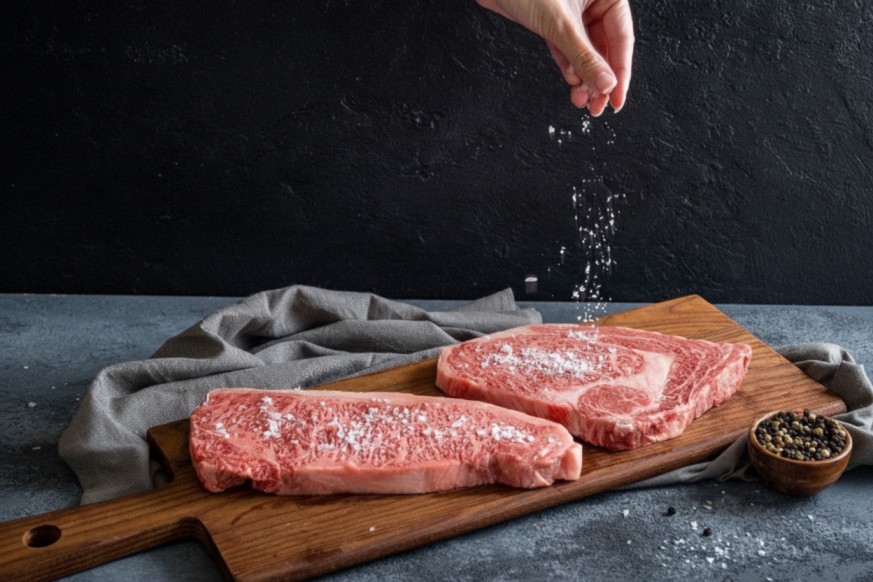
This is why chefs say:
“Season and sear immediately, or wait a long time. Never in between.”
There is no magic here. It’s basic moisture control.
Dry Brining (The Best Option)
Dry brining is the professional approach.
Here’s how it works:
- Season the steak generously with kosher salt
- Place it on a rack
- Leave it uncovered in the fridge
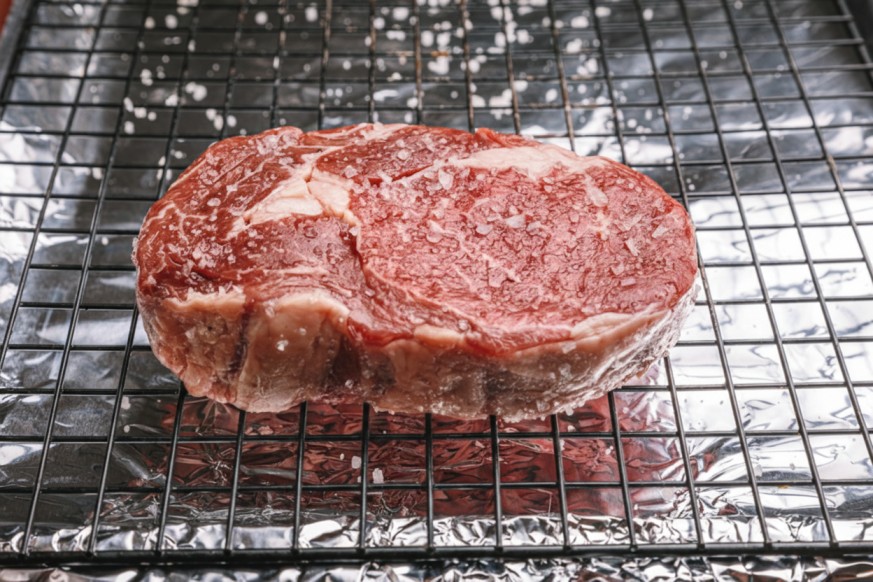
Over time, the salt pulls moisture out, then pulls it back in. Meanwhile, the fridge air dries the surface completely.
The result:
- Deep seasoning throughout the steak
- A surface that is bone dry
- Better browning
- Better moisture retention inside
This is how you get a crust that cracks when you cut into it.
Why Uncovered Matters
Covering the steak traps moisture. That defeats the entire purpose.
Leaving it uncovered allows airflow to evaporate surface moisture. Think of it like air-drying. The drier the surface, the better the crust.
How Long to Dry Brine
- Minimum: 1 hour
- Ideal: 8 to 24 hours
The thicker the steak, the more it benefits from longer dry brining.
Common Mistakes to Avoid
- Don’t add oil during dry brining
- Don’t use fine salt (it overdoses easily)
- Don’t dry-brine thin steaks overnight
Kosher salt is ideal because it’s easy to control and distributes evenly.
Choosing the Right Oil
High heat requires oils with high smoke points.
Best Oils
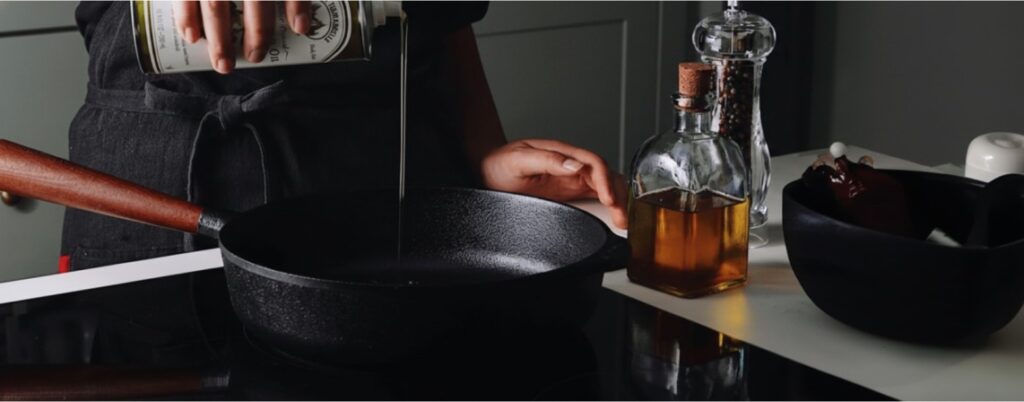
- Avocado oil
- Grape seed oil
Both can handle temperatures above 500°F without breaking down.
Other Good Options
- Ghee
- Peanut oil
- Beef tallow
Oils to Avoid
- Butter
- Olive oil
Butter burns around 300°F. Olive oil smokes too early. Though we have another use for butter later in this recipe.
The Cooking Process: Step by Step
Preparation
Start with:
- A well-marbled steak
- A cast-iron pan
- A dry-brined, dry surface
Preheat the Pan
Heat the pan for several minutes. Cast iron needs time to fully absorb heat.
Add Oil
Add 2 to 4 tablespoons of high-smoke-point oil. Wait until it just begins to smoke.
Render the Fat Cap
If your steak has a fat cap, hold it upright and render it until golden.
First Sear
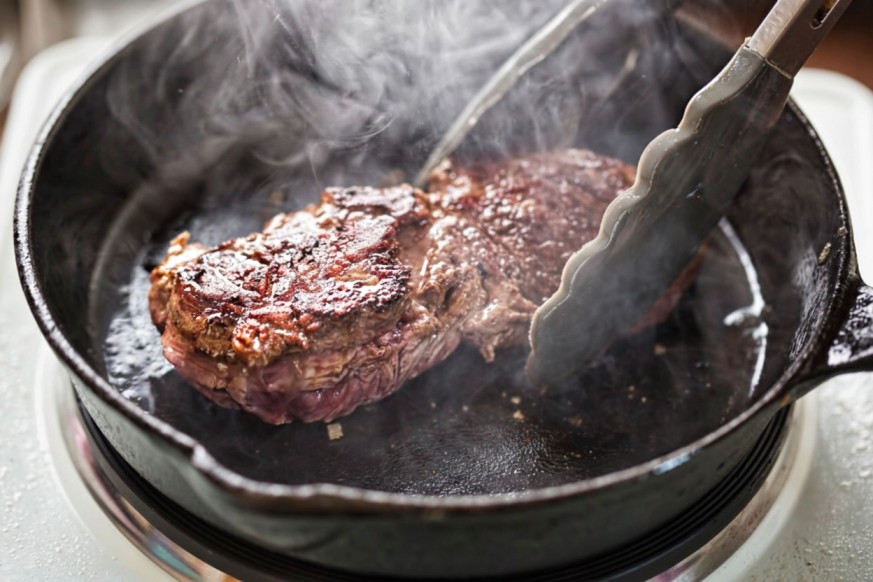
Lay the steak down. Let it cook for about 1 minute. Use a steak press if you have one.
First Flip
Flip the steak. You should see a deep, even crust forming.
Flip Often
Once both sides have crust, flip every 20 to 30 seconds. Frequent flipping leads to more even cooking and a better interior.
Butter Basting: When and Why
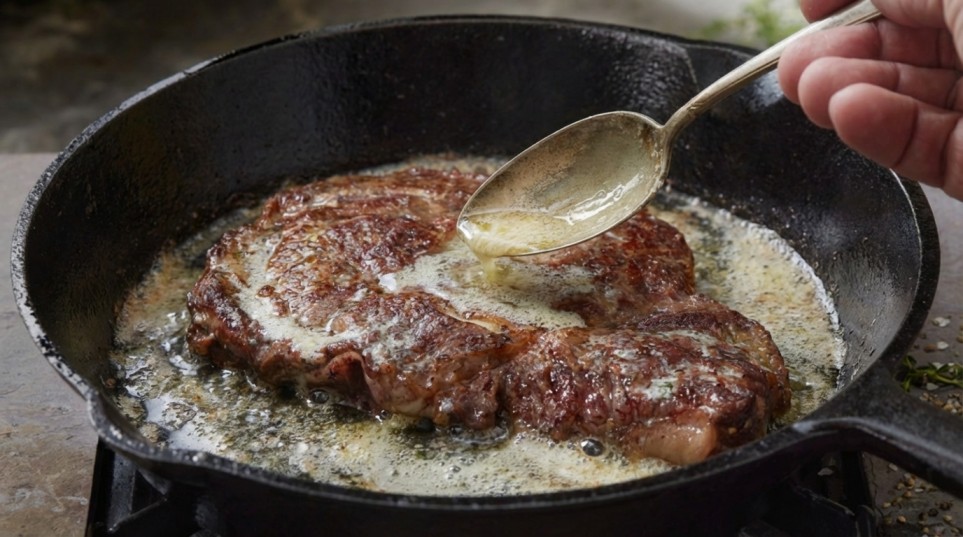
When the steak reaches about 90°F internally, it’s time to add butter.
Use ⅓ to ½ stick of butter.
Why Butter Basting Works
- Enhances crust flavor
- Adds richness
- Improves browning without burning
- Creates even heat distribution
You can add garlic, rosemary, or herbs at this stage.
Keep the butter bubbling. Lower the heat slightly if needed, but the butter must stay hot.
Spoon the butter over pale areas to even out the crust.
When to Remove the Steak
- Medium-rare: remove at 110°F
- Medium: remove at 125°F
Carryover cooking will finish the steak after removal.
Resting the Steak
Resting is not optional.
Rest the steak for 5 to 10 minutes. This allows juices to redistribute and prevents moisture loss when slicing.
Final Result
When everything is done right, the result speaks for itself. The steak comes out with a deep, dark mahogany crust that is even from edge to edge. That crust is firm, flavorful, and well-developed, not patchy or burned. It cracks slightly when you slice into it, which is exactly what you want from a proper high-heat sear.
Inside the steak, the meat is evenly cooked with a warm, rosy pink center and only a thin gray band near the edges. The texture stays tender and juicy because the steak was cooked hot and fast, then rested properly. The fat has rendered cleanly, adding richness without feeling greasy.
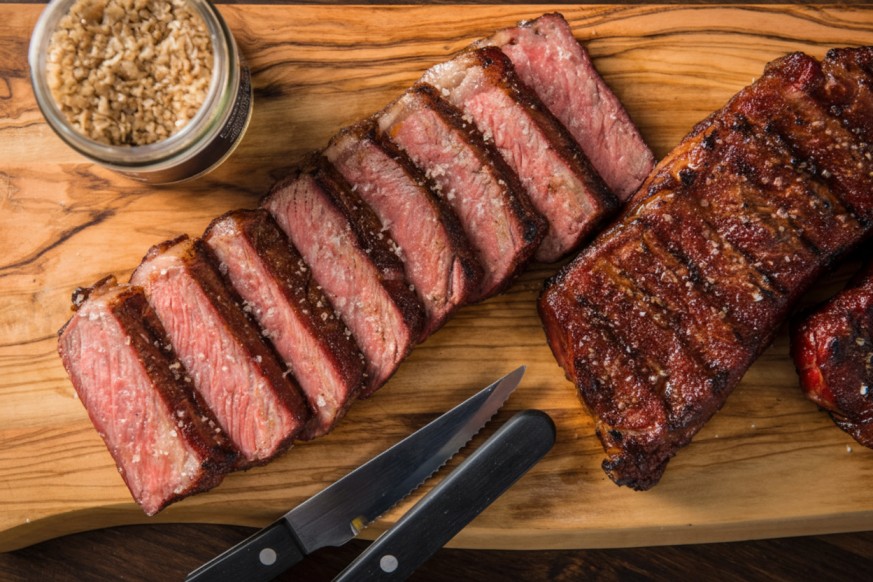
The flavor of this cast iron steak is clean and bold. You taste the beef first, followed by the toasted notes from the crust and the richness from the butter baste. If you added herbs or garlic at the end, they come through gently, not overpowering the steak. A great cast iron steak should have a strong crust and a juicy interior. Simple technique, proper heat, and good timing turn a basic cut of beef into a steakhouse-level result at home.