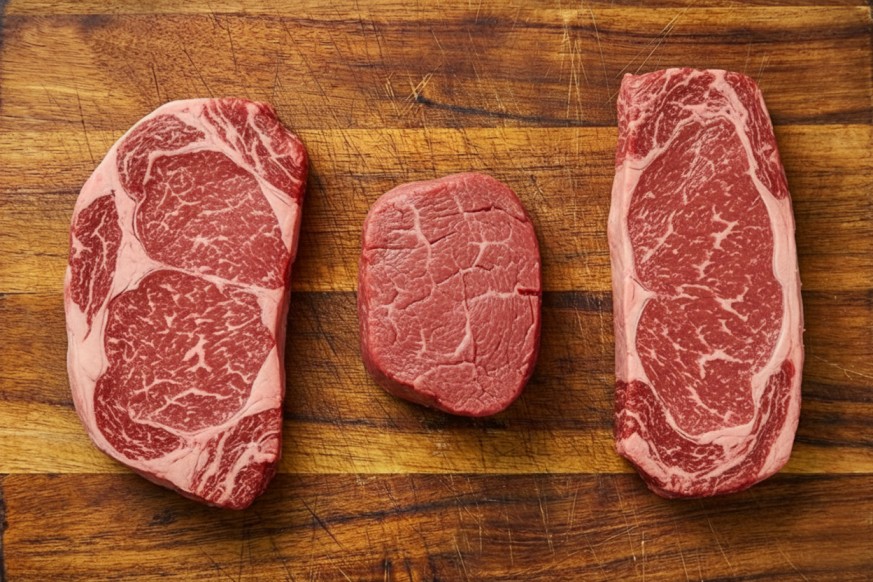
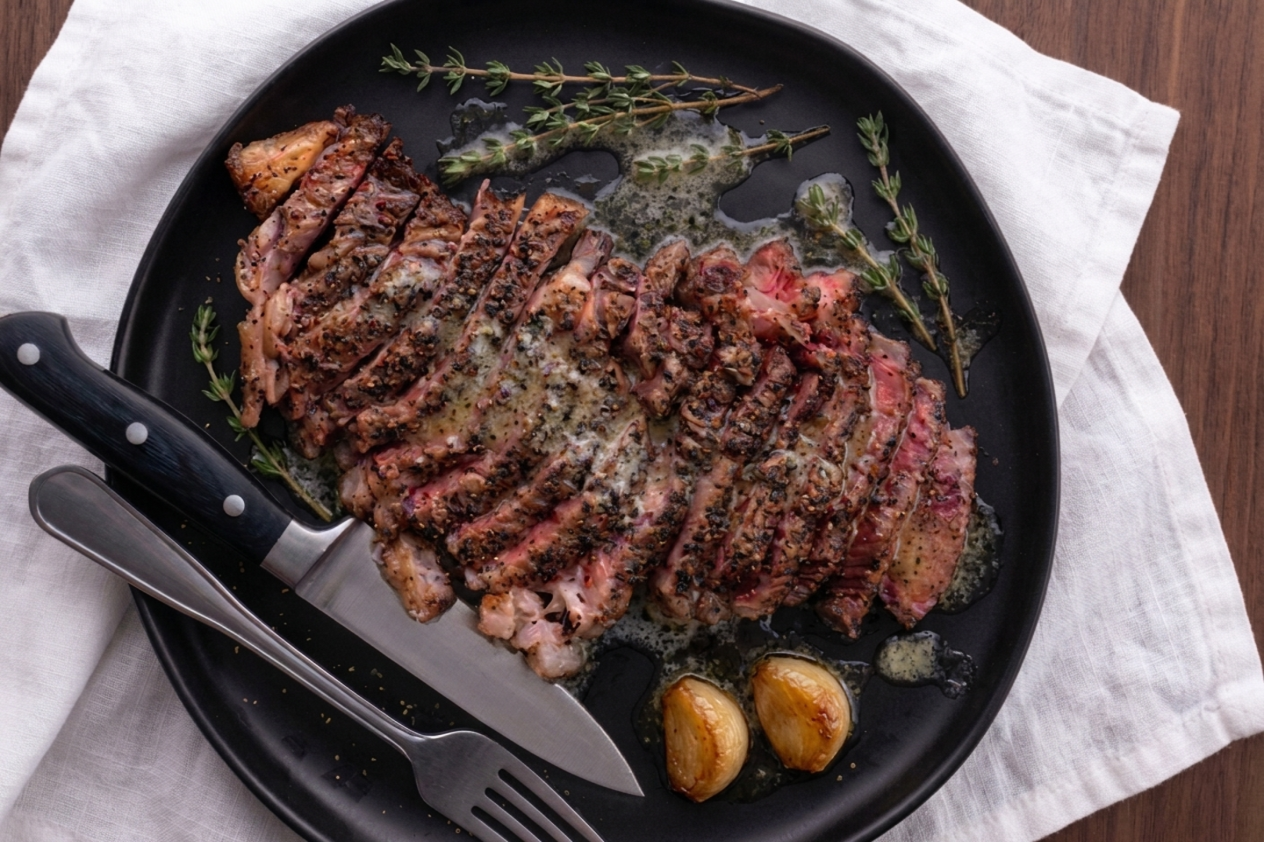
There’s a reason ribeye is one of the most loved steak cuts in the world. It has rich marbling, deep beefy flavor, and a tenderness that’s hard to beat. When the Ribeye Steak in a Cast-Iron Skillet is cooked properly, it develops a dark, flavorful crust on the outside while staying juicy and tender in the center.
For me, the best way to cook ribeye is in a cast-iron skillet. Cast iron holds heat incredibly well, which helps create that restaurant-style sear people chase after. Pair that with a hot oven and butter basting, and you get a steak that tastes far more expensive than the effort it takes to make.
This method is simple, reliable, and perfect for thick-cut ribeye steaks. If you’ve ever struggled with burnt outsides and raw centers, this guide will help you understand exactly why each step matters.
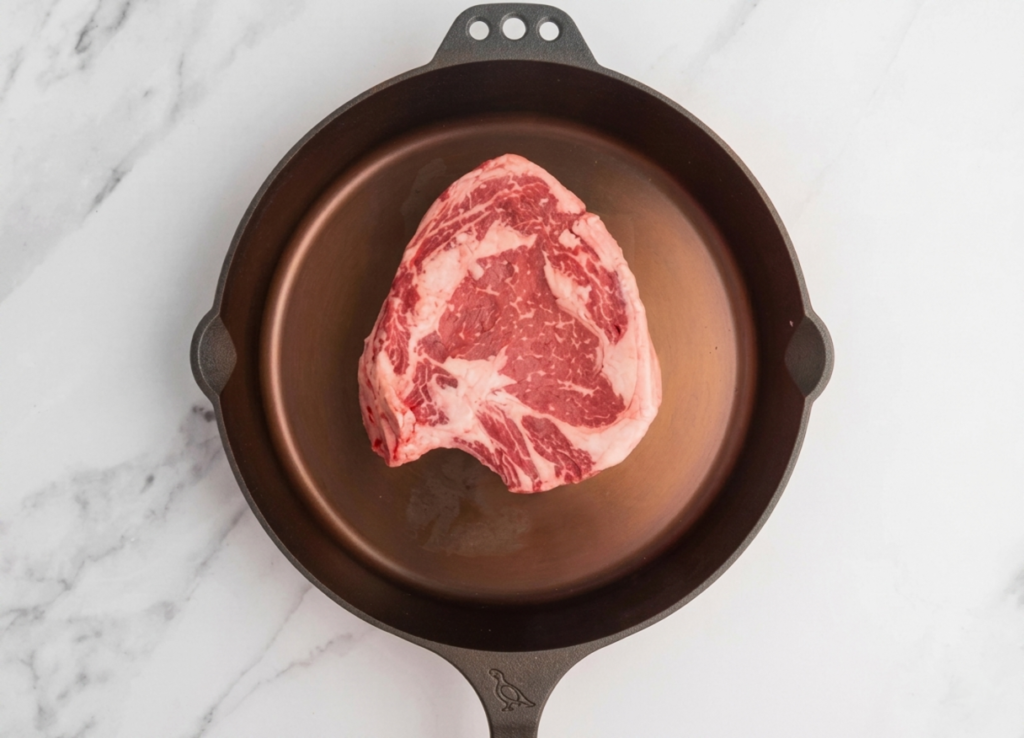
Why Cast Iron Is Perfect for Ribeye Steak
A cast-iron skillet is one of the best tools for steak because it stores heat extremely well. When the steak hits the pan, the temperature stays steady instead of dropping too quickly. That intense heat creates a deep brown crust through the Maillard reaction.
Another advantage is that cast iron can move directly from the stovetop into the oven. This is important when cooking thicker steaks because it allows the inside to finish cooking gently without burning the outside.
Ingredients
For the Ribeye Steak
- 1 thick-cut ribeye steak
- 1/4 tsp freshly cracked black pepper
- 1/2 tsp coarse kosher salt
- A small amount of oil for coating the steak
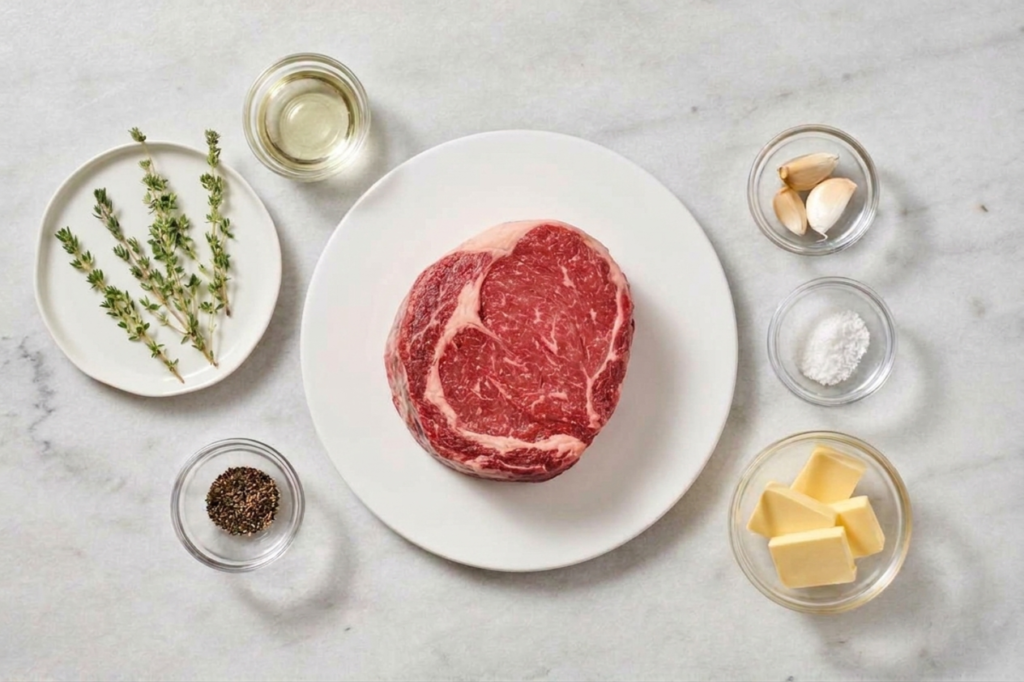
Aromatics
- 3–4 fresh thyme sprigs
- 2 garlic cloves, smashed
For Butter Basting
- 2 tbsp butter
Step 1: Preheat the Cast-Iron Skillet
Start by placing your cast-iron skillet in a 450°F oven. This gently and evenly heats the pan from all sides.
Cast iron takes time to heat up fully, but once it’s hot, it stays hot. That’s exactly what you want for a strong steak crust.
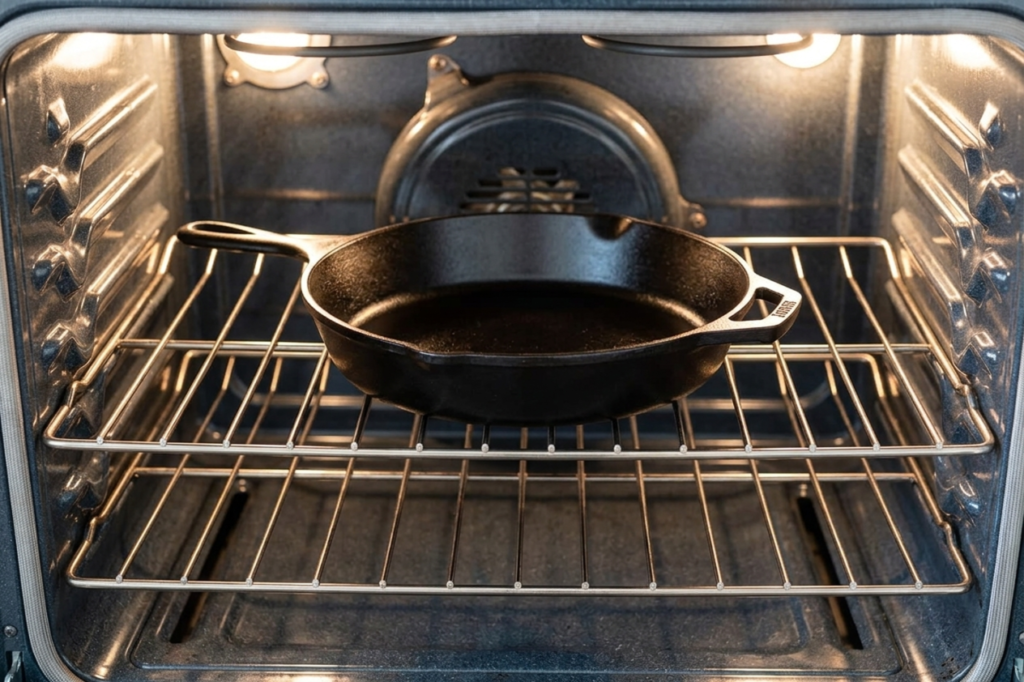
Once the skillet reaches temperature, carefully remove it and place it on the stovetop over medium heat.
Important: The handle will be extremely hot, so avoid touching it directly.
Step 2: Prepare and Season the Ribeye
Brush a thin layer of oil all over the steak, including the sides. This helps the seasoning stick evenly and ensures the oil sits directly on the meat instead of pooling in the pan.
Season the steak generously with:
- 1/4 tsp freshly cracked pepper
- 1/2 tsp coarse kosher salt
Make sure every side is properly seasoned. A thick steak needs enough seasoning so each bite has flavor.
Step 3: Sear the Ribeye Steak
Place the steak directly into the hot cast-iron skillet.
Since the steak is already coated in oil, you do not need to oil the pan separately. This keeps the oil exactly where it needs to be.
Cook the first side for about 2–3 minutes without moving it around. Let the skillet do the work.
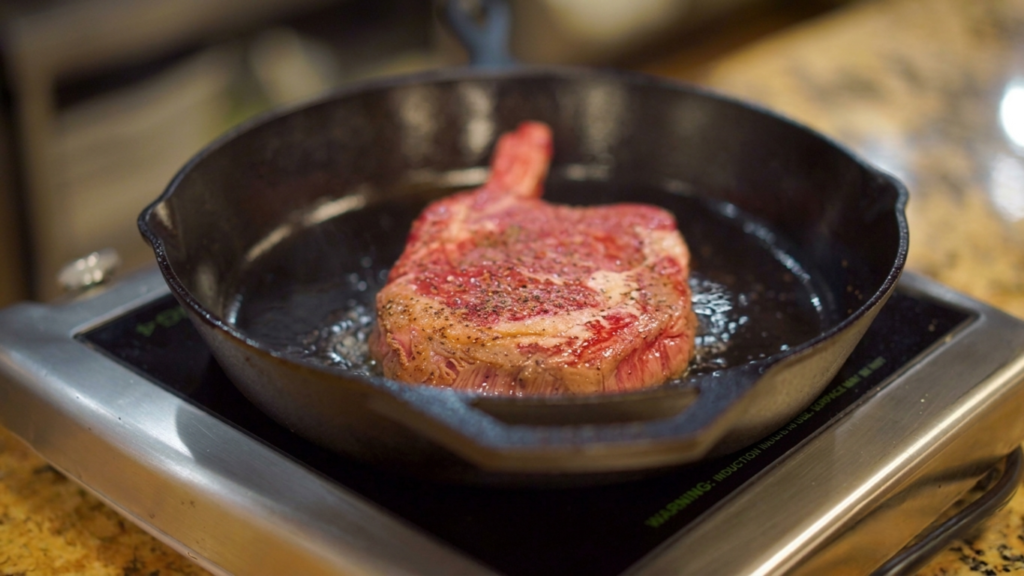
If this is your first time cooking steak indoors, expect some smoke. High-heat searing naturally creates smoke, especially with steak fat rendering in the pan. To avoid it, use a low-smoke-point oil. I’ve written in detail about this and everything else you need to know about steaks in my How to Cook the Perfect Steak in a Pan guide.
After 2–3 minutes, flip the steak. You should see a dark brown crust forming on the surface.
Step 4: Add Aromatics and Finish in the Oven
Add:
- 3–4 fresh thyme sprigs
- 2 smashed garlic cloves
Smashing the garlic helps release more flavor into the butter and pan juices later.
Now transfer the entire cast-iron skillet back into the oven for 6–7 minutes.
This step is important for thick steaks.
If you only cooked a thick ribeye on the stovetop, the outside could burn before the center reaches the proper temperature. Using the oven allows the steak to cook more evenly from all sides while the cast iron continues holding strong heat.
Step 5: Butter Baste the Steak
Remove the skillet from the oven and place it back on low heat.
Flip the steak once more and add:
- 2 tbsp butter
Allow the butter to melt completely. Then tilt the pan slightly and use a spoon to continuously pour the melted butter over the steak.
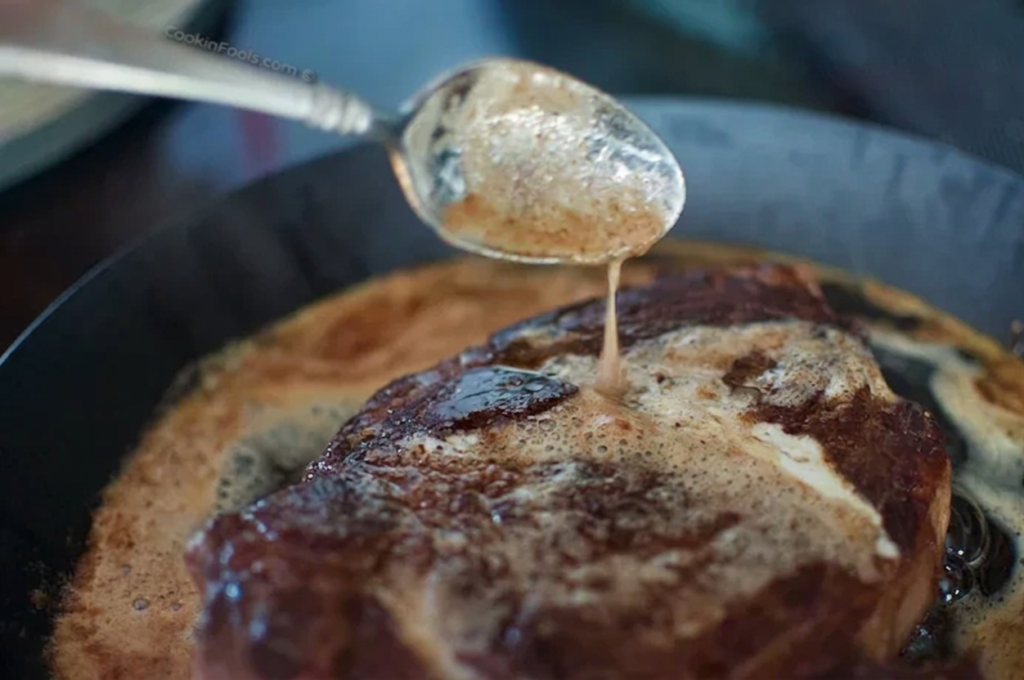
This technique is called butter basting.
The butter combines with the thyme, garlic, and steak juices to build flavor across the surface of the meat. It also helps the steak develop a richer crust and glossy finish.
Keep the aromatics in the pan while basting because they flavor the butter as it cooks.
Step 6: Check Doneness
For medium rare, butter baste for about 30 seconds.
If you want a different doneness, continue cooking slightly longer while checking the internal temperature using an instant-read thermometer.
Steak Doneness Temperatures
- Rare: 125°F
- Medium Rare: 135°F
- Medium: 145°F
- Medium Well: 150°F
- Well Done: 160°F
Using a thermometer is the most reliable way to avoid overcooking your steak.
Step 7: Rest the Steak
Once the steak reaches your desired temperature, remove it from the heat and place it onto a plate.
Pour all the melted butter, garlic, and herbs over the top.
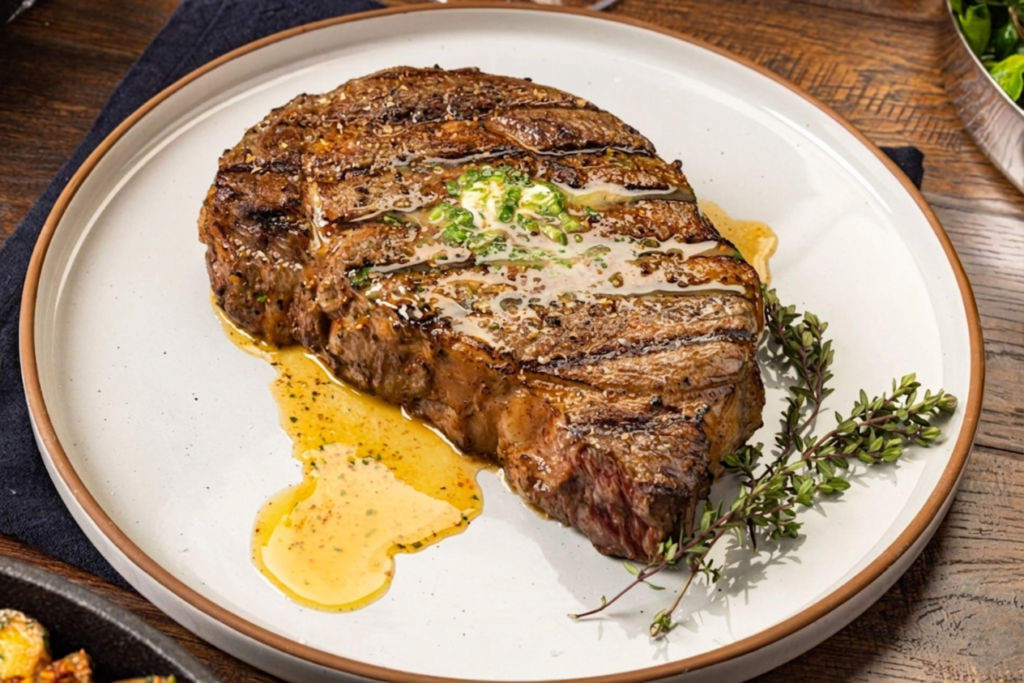
Now let the steak rest for at least 5 minutes before slicing.
Resting is important because it gives the juices time to redistribute through the meat. Cutting too early causes those juices to spill onto the plate instead of staying inside the steak.
Why This Method Works
This ribeye steak in a cast-iron skillet works so well because every step supports texture and flavor.
- The hot cast iron creates a deep crust
- The oven finishes thick steaks evenly
- Butter basting builds richness and flavor
- Resting keeps the steak juicy
When done properly, you get a steak with a crisp, flavorful exterior and a tender, juicy center.
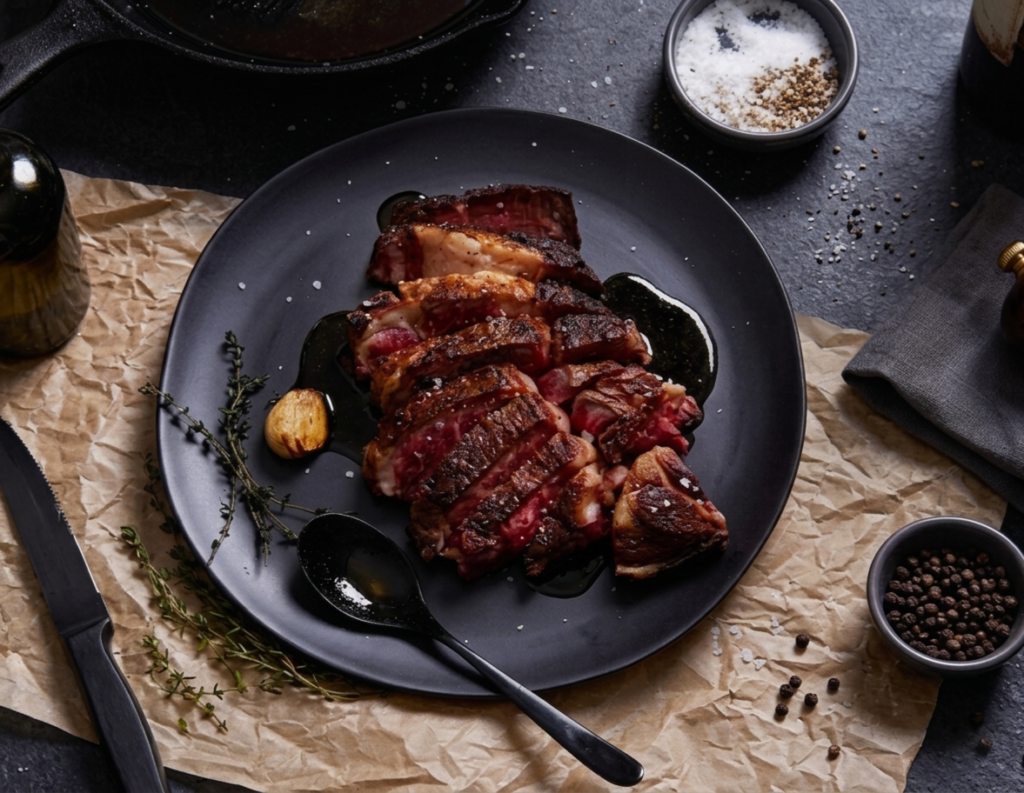
Cooking ribeye steak in a cast-iron skillet may sound intimidating at first, but once you understand the process, it becomes very straightforward.
Good heat, proper seasoning, and patience are what make the difference.
If you follow these steps carefully, you’ll end up with a steak that tastes as if it came out of a steakhouse kitchen.