How to Make Perfect Stovetop Popcorn

Popcorn might look simple, but the truth is, a lot can go wrong if you don’t know the little secrets behind it. Without the right tricks, you might end up with half-burnt kernels, soggy popcorn, or a pot full of stubborn unpopped ones. That’s frustrating, especially when it’s a stovetop popcorn recipe.
But don’t worry, I’m here to help. As a chef, I’ve made stovetop popcorn more times than I can count, and I’ve tested all the mistakes so you don’t have to. Once you learn the right steps, you’ll see how easy it is to make fresh, fluffy popcorn right on your stove. No fancy machine is needed, just a pot, a little oil, and the proper method. Let me walk you through it step by step so you can get perfect stovetop popcorn every single time.
Ingredients
The beauty of this stovetop popcorn recipe is in its simplicity. To make it, you really only need two things:
- Popcorn kernels
- Oil
That’s it. Simple, right?
But here’s the thing: choosing the right oil matters more than most people realize. Popcorn cooks fast, and it needs strong, steady heat. That’s why you should use an oil with a high smoke point, which means it can handle high heat without burning.
Some of my personal favorites are:
- Avocado oil – Rich flavor, clean taste, and high smoke point.
- Ghee (clarified butter) – Adds a buttery richness without burning.
- Expeller-pressed coconut oil – Light, slightly nutty, and perfect for popping.

All three of these give you not just well-popped kernels but also a delicious base flavor. You can experiment and see which one you like best. If you only have a standard neutral oil like canola or vegetable oil, that will work too. Just stay away from butter alone. It burns way too quickly and will leave you with a scorched mess before the popcorn has even popped.
Equipment
You don’t need any fancy gadgets or popcorn makers to make the freshest popcorn ever. All you really need is a pot. But here’s the part most people miss: your choice of pot matters more than you might think.
Picking the Right Pot
When popcorn pops, the kernels expand a lot, much more than you expect. So your pot needs to be large enough to give them space. If you use a small pot, one of two things will happen: either you’ll only be able to make a tiny batch at a time, or you’ll end up with popcorn overflowing all over your stove. Trust me, I’ve had to clean that up, and it’s not fun.
Size aside, the bottom of the pot is the real secret. You might think that a heavy-duty Dutch oven is the best choice, since it’s perfect for soups, stews, and braises. But for popcorn? Not so much. Here’s why.
A Dutch oven has a thick bottom designed to heat slowly and hold on to that heat for a long time. That’s great for slow cooking, but popcorn is the opposite; it needs fast, intense, and even heat to pop properly. If the pot takes too long to heat up, the oil won’t get hot enough fast enough, and you’ll end up with more “old maids.” That’s what we call the unpopped kernels that sit stubbornly at the bottom of your pot.
Instead, what you want is a pot with a thinner bottom. Thin-bottomed pots heat quickly and evenly, giving your kernels the quick burst of heat they need to pop. That means fewer old maids, more fluffy popcorn, and less waste.

Why Thin-Bottomed Pots Work Best
Let’s break it down a little further. When a popcorn kernel heats up, the water inside turns into steam. Once the pressure builds up enough, the kernel explodes, and that’s how you get popcorn. But this only works if the kernel heats up evenly and fast.
- In a thick pot, heat builds slowly. Some kernels get hot before others, so they pop early. By the time the rest are ready, those first ones may already be burning. You’ll get uneven batches and that scorched smell no one wants.
- In a thin pot, the heat spreads faster. Almost all the kernels reach popping temperature at the same time, so they pop in quick succession. The result is a fluffy, even bowl of popcorn with minimal burning.
This is why I always recommend skipping the heavy pots and reaching for a medium or large thin-bottomed pot instead.
Choosing a Lid
One more thing: don’t forget the lid. Popcorn needs a covered pot to trap the heat, but you also don’t want it airtight. If the steam can’t escape, the popcorn can turn soggy. If you have a lid with a little vent, that’s perfect. If not, just keep the lid slightly tilted while you cook. That way, the steam escapes, and your popcorn stays crisp.
Why This Matters
You might be wondering, does the pot really make that much difference? Absolutely. Think about it, popcorn is just two ingredients, kernels and oil. That means technique and equipment make all the difference. Using the wrong pot won’t ruin your popcorn, but it will leave you with fewer popped kernels, more waste, and a less enjoyable snack.
With the right pot, though, everything changes. The oil heats evenly, the kernels pop in quick bursts, and you’re left with a big bowl of crisp, light, perfectly cooked popcorn. It’s one of those small details that separates “okay popcorn” from “movie-theater worthy popcorn.”
So, skip the Dutch oven and reach for a medium or large pot with a thinner bottom. Pair it with a high-smoke-point oil, and you’re already halfway to popcorn perfection. The rest comes down to timing and technique, which I’ll guide you through step by step in the cooking section.
Once you master the pot and oil combo, you’ll never look at store-bought popcorn the same way again. A fresh, homemade stovetop popcorn recipe is lighter, healthier, and more satisfying. And best of all, it’s simple. Just a handful of kernels, a splash of oil, and the right pot, that’s all it takes.
Follow These Steps to Perfect Stovetop Popcorn
Making this stovetop popcorn recipe might feel old-fashioned, but once you try it, you’ll see why chefs love this method. It gives you full control; no chemicals, no mystery flavoring, no microwave bag smell. Just fresh, hot, fluffy popcorn the way it was meant to be.
The process is simple, but the little details matter. If you follow these steps, you’ll get consistent results every time, crispy popcorn with hardly any unpopped kernels at the bottom of the pot.
Step 1: Measure Your Kernels
Start with ½ cup of popcorn kernels.
This may not sound like much, but popcorn expands a lot. That small half cup will turn into a big bowl, enough for two hungry snackers or even three. If you’re making it for a group, you can double the recipe, but make sure your pot is large enough to handle the extra kernels.
Step 2: Add the Oil
Measure out 2 tablespoons of oil and pour it into your pot.
The oil is not just there to keep the popcorn from burning; it’s also the conductor of heat. Each kernel needs to be surrounded by oil so it can heat up quickly and evenly. Make sure the bottom of the pot is coated, but don’t drown it. Too much oil will leave your popcorn greasy.
Step 3: Turn the Heat Up
Set your stove to high heat.
This part is important. Popcorn needs an intense burst of heat to pop properly. If your heat is too low, the kernels will cook slowly, releasing steam before they can burst. That leads to chewy popcorn. High heat makes the magic happen.
Step 4: Test with Two Kernels
Drop two popcorn kernels into the pot and cover it with the lid.
These are your test kernels. Think of them as scouts; they let you know when the oil is hot enough for the rest of the batch.
Step 5: Listen for the Pop
Step back and wait for those two kernels to pop.
This is your signal. Once they pop, you know the oil has reached the right temperature. If you pour in all the kernels too early, they’ll sit in lukewarm oil and never pop evenly.
Step 6: Remove the Pot
Take the pot off the heat and remove those two popped kernels.
This pause is another chef’s trick. By taking the pot off the heat, you stop the oil from overheating while you add the rest of the kernels.

Step 7: Add the Rest of the Kernels
Pour in the rest of your measured kernels.
Spread them out so they’re evenly coated in oil. You want each kernel to have a fair chance at popping.
Step 8: Shake It Up
Put the lid back on and give the pot a strong shake.
This ensures the oil coats every kernel. It also prevents them from sitting in one hot spot, which could cause burning.
Step 9: Let It Rest
Here’s the step most people skip. Let the pot sit for one full minute.
This is crucial. During that minute, all the kernels are gently warming up together. That means when you put the pot back on the stove, they’ll pop almost at the same time. Skip this step, and you’ll get uneven results; some burnt, some unpopped.
Step 10: Back on the Heat
After that minute, place the pot back on the stove and turn the heat back up to high.
Now your popcorn is ready for the main event.
Step 11: Shake Occasionally
While the pot heats up, give it a shake now and then.
This keeps the kernels from sticking to the bottom and helps them cook evenly. You don’t need to shake constantly, just a few times as things get going.
Step 12: Listen for the Popping
After a couple of minutes, you’ll hear the kernels explode one by one, then all at once.
That sound is your kitchen’s music right now.
Step 13: Watch the Rhythm
When the popping slows down to just one or two pops every few seconds, it’s time to move on.
Don’t wait until it’s completely silent, or you risk burning what’s already popped.
Step 14: Let It Rest Again
Take the pot off the heat but keep the lid on for a short while.
This gives the last few kernels time to finish without burning the rest. Patience here makes a big difference.

Step 15: Enjoy the Reward
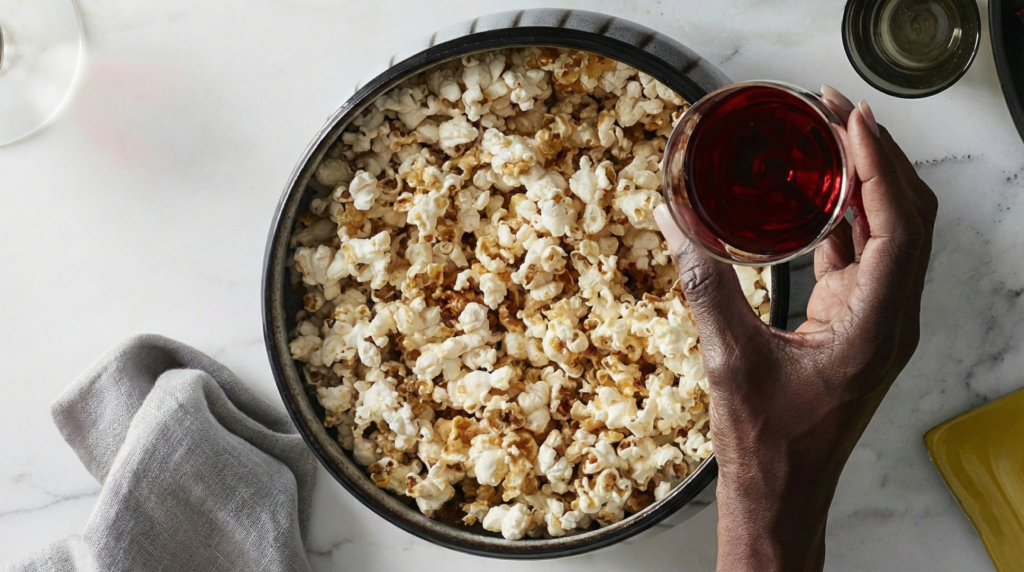
Once things are calm, carefully open the lid. Watch out for any late poppers! Pour your popcorn into a large bowl, and it’s ready to eat.
You’ve just made chef-worthy stovetop popcorn.

Seasoning Options
Now for the fun part, flavor.
Think of your popcorn as a blank canvas. You can go classic with just melted butter and salt, or you can get creative with spices and blends.

Here are some ideas to try:
- Classic: Melted butter + a sprinkle of fine salt
- Savory: Garlic powder, smoked paprika, or chili powder
- Cheesy: Nutritional yeast or a dusting of Parmesan
- Sweet: Cinnamon and sugar, or cocoa powder with a touch of vanilla sugar
The best thing about making popcorn at home is that you’re in control. No two bowls have to taste the same.

Chef’s Tip: Popcorn Salt
If you want to season with salt, here’s a trick that makes a big difference: blend your salt first.
Toss regular table salt into a blender and run it on high until it turns into a fine powder. This “popcorn salt” sticks to the popcorn much better than coarse salt. Instead of sinking to the bottom of the bowl, it clings to every fluffy piece. The result? Every bite tastes perfectly seasoned.
And that’s it. Just a few steps, a pot, and some simple tricks, and you’ve got perfect homemade stovetop popcorn; fluffy, crisp, and ready to be flavored however you like.
Once you try it this way, you’ll never go back to microwave bags.